
Threes!
Asher VollmerPuzzle
4.51.99K Reviews
- Version
- 3.1.98304
- Installs
- 100.00K
- Age Rating
- Everyone
Screenshots
Our Review of Threes!
 Analysis by Appyee
If you’re anything like me, you've probably spent countless hours swiping left and right on your phone, but I’m not talking about dating apps. I’m talking about Threes!, the addictive number puzzle game that has charmed its way into many of our hearts. Let's dive into what makes this game such an irresistible time sink.
A small puzzle that rewards attention
For a quick session while waiting for a bus or taking a quiet break, this game is easier to pick up than many puzzle titles with long tutorials or elaborate levels. Its familiar swipe controls let me start making decisions right away. The trade-off is that a short session can turn into a longer one: a promising board often invites just one more move, and then another.
I find it works especially well when I want a game that asks for thought without demanding a long stretch of uninterrupted attention. A move is quick, but choosing its direction can take a moment. That makes it a useful fit for spare minutes, though I would not choose it when I need to keep my attention firmly on another task. It is easy to pause mentally between turns, but the urge to improve a board can still pull me back in.
The game is a paid puzzle from developer Asher Vollmer. It costs $0.99, is rated Everyone, and has reached over 100,000 installs. Its 4.5 average comes from around 33,000 ratings, with about 2,000 written reviews. Those figures suggest that it has found a lasting audience, but the more useful question for me is whether its particular kind of thinking suits you.
The Charm of Simplicity
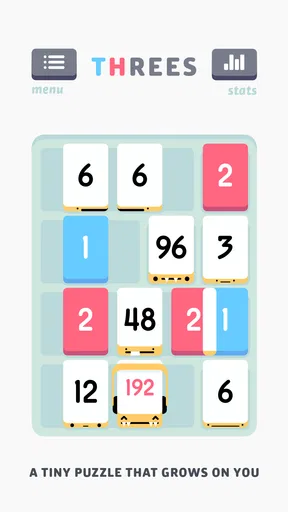
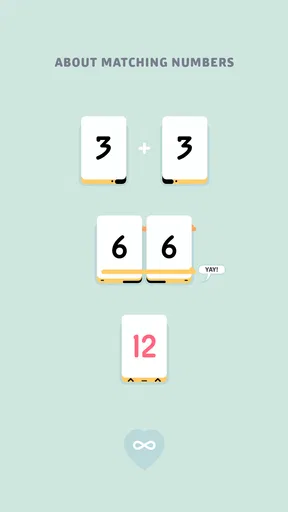
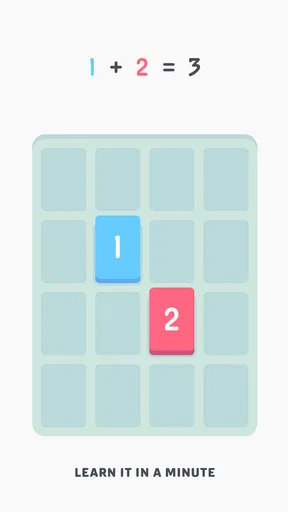
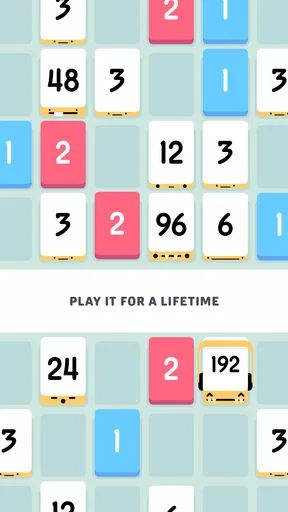
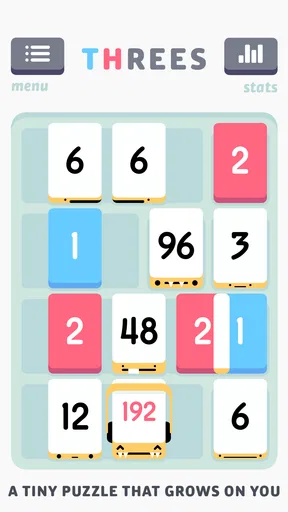
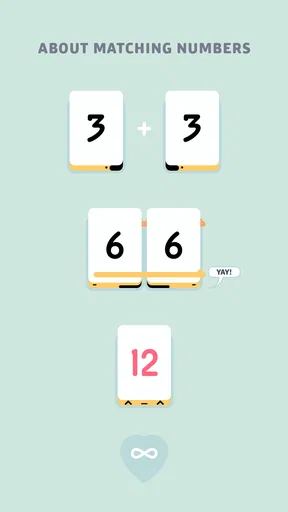
At first glance, Threes! seems deceptively simple. The board is a 4x4 grid, and your goal is to combine numbers to multiply them into higher numbers. You start with a one and a two, which combine to make a three. From there, the game challenges you to combine threes, sixes, twelves, and so on. It’s a game of strategy, foresight, and just a little bit of luck.
What I love about this app is how it manages to be so engaging with such a straightforward premise. You’d think that after a few rounds it might get repetitive, but the random generation of numbers keeps each game fresh. Every swipe leads to new possibilities, making it both challenging and entertaining.
For me, the important skill is not simply spotting a pair that can merge. It is keeping the board arranged so future pairs remain reachable. Before swiping, I try to picture where the tiles will settle and which edge will become useful next. A move that creates an immediate merge can still be poor if it scatters my larger values or leaves awkward gaps. This is one reason the puzzle feels more deliberate than a quick matching game.
There is a practical way to make those choices less frantic: settle on a preferred corner or edge for your largest tile, then use each move to keep the rest of the board organized around it. It is not a guaranteed strategy, since incoming tiles and crowded rows can force a change of plan, but it gives me a reference point when several directions look equally tempting. If a board is already cramped, I pay more attention to preserving open lanes than to chasing a single impressive merge.
Design and Aesthetic
Visually, Threes! is a treat. The developers have nailed a minimalist design that is easy on the eyes, yet full of personality. Each number tile has its own character and quirky sound effects that give the game a lively, animated feel. The theme music is catchy without being intrusive, making it perfect for those long play sessions.
It's one of those games where you can tell that a lot of love and thought went into every detail. The animations are smooth, and the feedback for each move is satisfying. You'll find yourself smiling at the little characters on the number tiles as they chatter and giggle while you play.
Reading the board and following a turn
The uncluttered grid gives the numbers room to stand out, and the limited set of actions makes navigation straightforward: I focus on the board and swipe in one of four directions. That simplicity can help someone who dislikes busy puzzle interfaces, with pop-ups and overlapping controls competing for attention. I also appreciate that a turn has a clear visual result, so I can connect a swipe with what changed and reconsider my plan.
Still, a clean look is not the same thing as suitability for every player. The main activity depends on visually tracking several values and noticing which tiles can combine, so someone who has difficulty distinguishing the numbers or following movement across the grid may find the central challenge harder. The characterful presentation adds charm, but it does not remove the need to read the board accurately.
Gameplay Mechanics
Let’s talk mechanics. The game’s controls are as smooth as butter. Swiping in any direction shifts the entire board, and new tiles appear at random. It might sound simple, but the strategic depth is immense. You need to think several moves ahead to avoid gridlock, where no more moves are possible.
Each move requires careful consideration, and there’s a satisfying sense of accomplishment when you finally manage to combine that elusive high number tile. But beware—one wrong move can snowball into a complete board freeze, ending your game prematurely. It's this high-risk, high-reward gameplay that keeps you coming back for more.
Motor and sensory comfort
Swiping is the central physical interaction, so the game may be less comfortable for someone who finds repeated touch gestures difficult. Each move is simple, but a long session means repeating the same motion many times. I would keep sessions short if that motion becomes tiring, rather than assuming the game’s easy-to-learn controls are effortless for every hand or device setup.
Its gentle, playful presentation can make the puzzle feel less severe than a stark score-chasing game, but sound and movement are part of that personality. If audio would be distracting in a shared room, or if you prefer a quieter experience, that is worth considering before settling in for a longer session. The puzzle’s logic remains the main draw, while its expressive feedback may be a welcome extra for some players and unnecessary stimulation for others.
When and where it fits
I can picture playing a round during a lunch break, then putting the phone away when the break ends. The turn-by-turn rhythm makes it easier to return to a board than a game built around rapid reactions, but I would avoid starting when I need to listen closely to someone or watch what is happening around me. The game is quiet in its basic structure, yet planning can absorb more attention than a quick glance suggests.
It is also a better match for someone who enjoys improving through reflection than someone who wants a steady stream of new stages and explicit goals. A run develops from the current board, and the satisfaction comes from making better decisions and setting a personal score. If you want a story, a collection of puzzles with fixed solutions, or a shared competitive activity, another kind of puzzle game may meet that need more directly.
How it compares with other number puzzles
Compared with familiar merge games, the appeal here is the compact grid and the need to manage space as well as combine values. A tile that looks useful in isolation can make the overall board worse, because every swipe shifts the whole arrangement. That gives the puzzle a more positional feel than games where I can simply select two matching pieces or work through a set sequence of levels.
The same design is also its main limitation. Random arrivals mean I cannot treat a run like a fixed logic problem with one correct solution, and a crowded board can leave me feeling that a poor sequence has narrowed my options. Players who prefer carefully authored stages, clear stopping points, or direct control over each piece may be happier with a level-based puzzle. I reach for this one when I want a repeatable challenge rather than a curated set of tasks.
Replayability and Challenge
One of the game’s strongest suits is its replayability. Thanks to its procedural generation, no two games are the same, ensuring that you’ll never get bored. Plus, there's always the lure of beating your high score or outdoing your friends.
Threes! doesn’t bombard you with ads or in-app purchases, which is a breath of fresh air in today’s mobile game market. You pay a small price upfront, and the game is yours to explore without interruption. This commitment to a pure gaming experience really sets it apart.
The upfront price is worth weighing against the way you play. If you like returning to a puzzle repeatedly and learning from earlier runs, a one-time purchase can feel more appealing than a free game that interrupts play with promotions. If you only want to try number merging briefly, though, paying before you know whether the board-management style clicks may be a drawback. I would make the choice based on whether this particular slow-burn challenge is the kind I return to, not just on its short description.
The game was released on March 11, 2014, and its current version is 3.1.98304; it requires Android 5.1 or later. That gives Android users a straightforward compatibility check before paying. I would also think about the device and setting where I intend to play: the compact board benefits from being easy for me to see, and the repeated swipes need to feel comfortable on the screen I actually use.
Who I would recommend it to
I would recommend it to people who enjoy spotting patterns, planning several moves ahead, and accepting that a random tile can disrupt a neat plan. It is particularly suited to players who like a puzzle they can revisit without needing to remember a story or complete a sequence of stages. The warm tile characters may also make number play feel more inviting than a bare grid, although the core task remains visual and strategic.
I would suggest skipping it if you dislike games where one crowded board can end a run, or if you want each attempt to have a clearly defined finish beyond improving your result. It is also not my first choice for a player who needs very low visual complexity in the sense of minimal movement, or who finds repeated swiping uncomfortable. The presentation is restrained, but the game still asks the player to watch tile changes and use touch gestures throughout.
Final Thoughts
In conclusion, Threes! is a delightful puzzle game that strikes the perfect balance between simplicity and depth. Its charming design, smooth mechanics, and endless replayability make it a must-have for any mobile gamer. It’s the kind of game you can play for five minutes or five hours, and it never feels like time wasted. So, if you haven't tried it yet, I highly recommend giving it a go. Just be warned: once you start, it’s hard to stop. Happy swiping!
My recommendation is more specific: choose it if you want a thoughtful number puzzle with a distinctive, friendly style and do not mind a paid entry point or runs shaped partly by chance. It is less suitable if you need fixed, bite-sized levels, rely on non-visual ways to follow play, or prefer puzzle games with a clear endpoint each time. For me, its best quality is how much planning it draws from a tiny board; its main caveat is that the same pressure to manage every space can become frustrating when luck and a crowded grid leave few comfortable moves.
Verdict
Strengths of Threes!
- Simple yet addictive gameplay mechanics.
- Visually appealing with a clean design.
- Suitable for short or long play sessions.
- Requires strategic thinking and planning.
- No intrusive ads to interrupt gameplay.
Limitations of Threes!
- Can become repetitive over time.
- Limited tutorial for new players.
- No multiplayer or social features.
- High difficulty curve might frustrate some.
- Battery drain on older devices.
Similar Picks in This Category
View All
Block Blast!
HungryStudio4.8

Braindom: Brain Games Test
Lahana Game Studio4.6

AMAZE!
CrazyLabs LTD4.6

Sudoku - Classic Sudoku Puzzle
Oakever Games4.7

Art Puzzle - Puzzle Games
Easybrain4.8

Amaze GO!
Oakever Games4.9
Frequently Asked Questions
What is the main objective of Threes!?
Threes! is a highly addictive puzzle game where the goal is to combine numbered tiles on a grid to create larger numbers. Starting with tiles numbered 1 and 2, players must strategically merge them to form tiles like 3, 6, 12, and so on, while managing limited space. It's a game of strategy and quick thinking.
Is Threes! suitable for all ages?
Yes, Threes! is designed to be family-friendly and suitable for all ages. Its simple interface and easy-to-understand rules make it accessible for both children and adults. The game promotes logical thinking and strategic planning, providing an educational yet entertaining experience.
Does Threes! require an internet connection to play?
Threes! can be played offline, making it a perfect choice for commutes or times when you don't have internet access. While certain features like leaderboards may require internet connectivity, the core gameplay is fully functional offline, allowing uninterrupted play.
Are there in-app purchases in Threes!?
Threes! offers a complete game experience with a one-time purchase, meaning no in-app purchases are necessary. This ensures that players can enjoy the game without interruptions or the need to buy additional content, providing a seamless and distraction-free experience.
How does Threes! handle player progression and difficulty?
Threes! uses an incremental difficulty curve where the game becomes more challenging as you progress. It encourages players to improve their strategic thinking and planning skills. The randomness of tile generation adds a layer of unpredictability, ensuring each game feels fresh and unique.
Play our best games!


